


Flight WN4761 diverted to Charleston after the crew reported a suspected fuel leak. Read what happened, how passengers were affected, and the latest updates.
A routine domestic flight turned into an unexpected emergency after Southwest Airlines Flight WN4761 was diverted to Charleston International Airport (CHS) following reports of a suspected fuel leak during the journey. The aircraft, which was traveling from Orlando, Florida, to Manchester, New Hampshire, declared an emergency while cruising at high altitude. Thanks to the swift action of the flight crew and air traffic controllers, the aircraft landed safely, with all passengers and crew members unharmed. The incident once again highlighted the importance of strict aviation safety procedures.
What Happened Mid-Flight?
Flight WN4761 departed Orlando as scheduled and initially progressed without any issues. However, while flying at approximately 37,000 feet, the pilots noticed indications of a possible fuel leak. Following standard aviation safety procedures, the crew declared an emergency by transmitting the 7700 emergency transponder code, allowing air traffic controllers to prioritize the aircraft for landing.
The decision to divert was made purely as a precaution to ensure the safety of everyone on board.
Safe Landing in Charleston
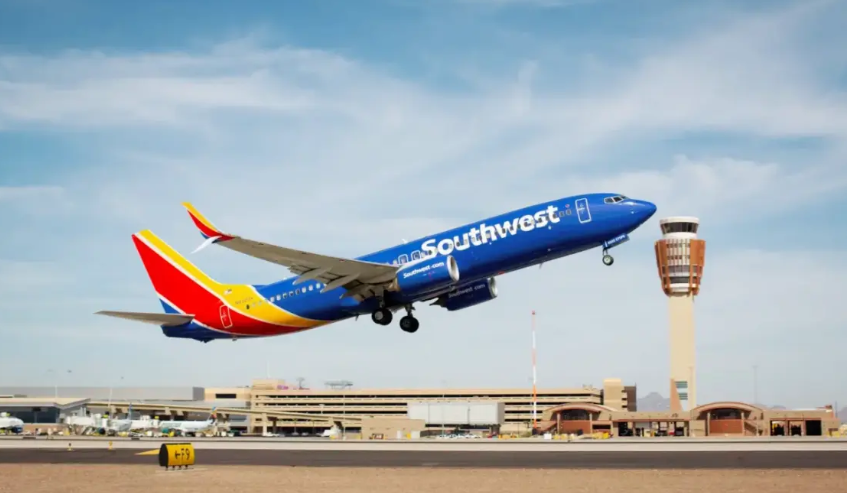
After declaring the emergency, the Boeing 737-800 was redirected to Charleston International Airport in South Carolina. Emergency response teams, including airport firefighters and rescue personnel, were already positioned on the runway before the aircraft touched down.
The pilots completed a safe landing without any complications, and officials confirmed that no injuries were reported among passengers or crew members. The calm response from the flight crew and emergency services helped prevent panic and ensured a smooth evacuation process if required, though it ultimately wasn’t necessary.
Passengers Continue Their Journey
Following the precautionary landing, Southwest Airlines arranged for a replacement Boeing 737 MAX 8 aircraft to transport passengers to their original destination in Manchester, New Hampshire. Although travelers experienced a delay of several hours, the airline prioritized passenger safety over maintaining the original schedule.
Meanwhile, the original aircraft remained in Charleston, where maintenance engineers began a detailed inspection to determine the exact cause of the suspected fuel leak before returning the plane to service.
Why Flight Diversions Are Important
Emergency diversions are a normal part of modern aviation safety. Whenever pilots detect any possible mechanical issue—even one that later proves minor—they are trained to land at the nearest suitable airport. Aviation experts emphasize that these precautionary decisions significantly reduce risk and demonstrate the effectiveness of airline safety protocols.
While flight diversions may inconvenience passengers, they are considered a sign that airlines are following internationally accepted safety standards rather than taking unnecessary risks.
Conclusion
The diversion of Flight WN4761 to Charleston serves as another reminder that passenger safety remains the highest priority in commercial aviation. Although the suspected fuel leak caused delays, the professional response by the pilots, air traffic controllers, airport emergency teams, and Southwest Airlines ensured a safe outcome for everyone on board. Investigators and maintenance teams will continue examining the aircraft to identify the source of the issue, while passengers successfully completed their journey on a replacement flight.
Image Credit: All images belong to their respective owners and are used solely for reference and informational purposes.