



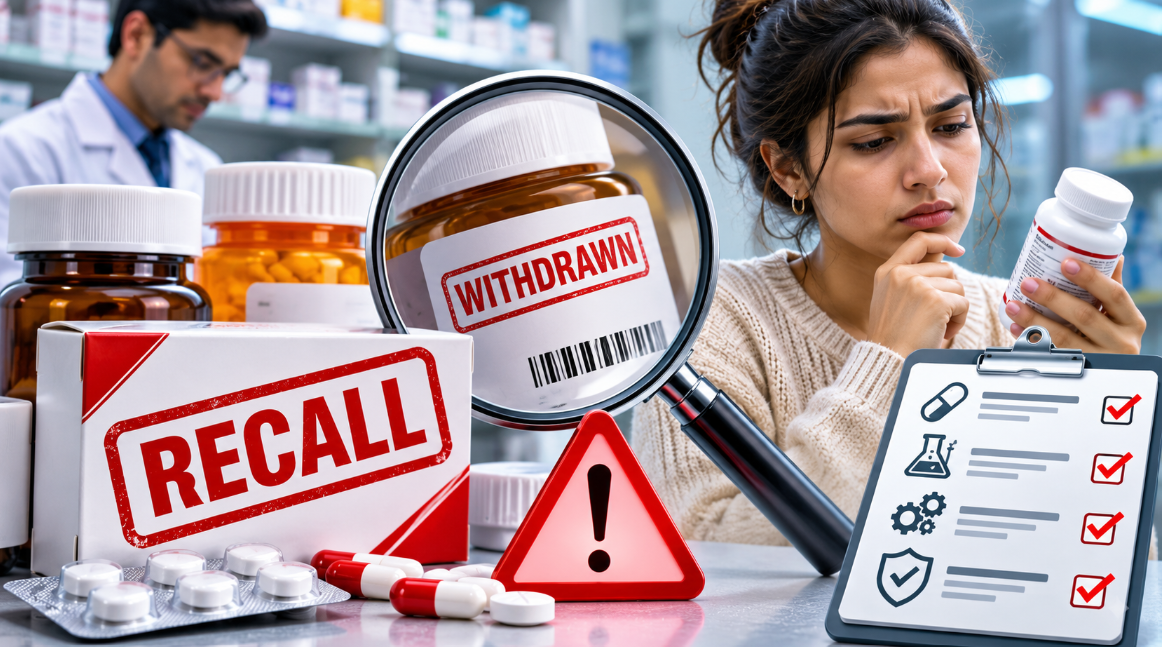
Drug recalls are an important part of public health and patient safety. Every year, pharmaceutical companies and regulatory authorities may withdraw certain medicines from the market because of safety concerns, manufacturing defects, contamination, or incorrect labeling. A drug recall is designed to protect patients from potentially harmful medications and ensure that medicines available to the public meet required safety and quality standards. Understanding how drug recalls work can help consumers make informed decisions about their health.
What Is a Drug Recall?
A drug recall occurs when a pharmaceutical company or regulatory authority removes a medicine from the market or asks consumers to stop using a particular product because it may be unsafe, defective, or unsuitable for its intended purpose.
Recalls can involve prescription medicines, over-the-counter drugs, medical products, and certain pharmaceutical preparations. Depending on the seriousness of the problem, a recall may affect a specific batch, multiple batches, or an entire product.
Why Are Medicines Recalled?
There are several reasons why a medicine may be recalled. One common reason is contamination during the manufacturing process. Harmful substances, bacteria, or other unwanted materials may accidentally enter a pharmaceutical product.
Another reason is incorrect labeling. If packaging contains inaccurate dosage instructions, incorrect ingredients, or misleading information, patients may take the medicine incorrectly.
Manufacturing defects can also lead to recalls. Problems with the strength, quality, stability, or composition of a medicine may affect its effectiveness and safety.
In some cases, new scientific evidence reveals unexpected side effects or previously unknown health risks after a medicine has entered the market.
Different Types of Drug Recalls
Drug recalls are generally classified according to the level of potential health risk.
Class I Recall: This is the most serious category. It involves situations where using a recalled medicine could cause serious health consequences or even death.
Class II Recall: This category involves medicines that may cause temporary or medically reversible health problems, while the likelihood of serious harm is relatively low.
Class III Recall: This category covers products that are unlikely to cause adverse health consequences but fail to meet certain regulatory or quality standards.
These classifications are commonly used by the US Food and Drug Administration (FDA).
What Should Consumers Do During a Drug Recall?
Consumers should take drug recall announcements seriously. They should check the medicine’s name, manufacturer, batch number, and expiry date against the recall notice.
If their medicine is affected, they should follow the official instructions and contact a healthcare professional or pharmacist before making changes to prescribed treatment.
Patients should not automatically stop essential medication without seeking appropriate medical advice, as suddenly discontinuing certain treatments can also create health risks.
Role of Regulatory Authorities
Government agencies play a major role in monitoring medicine safety. In the United States, the FDA oversees drug recalls and pharmaceutical safety regulations.
In India, the Central Drugs Standard Control Organisation (CDSCO), along with state drug control authorities, monitors the quality, safety, and regulation of medicines.
These organizations investigate safety concerns, issue alerts, coordinate recalls, and help ensure that pharmaceutical companies follow established standards.
Conclusion
Drug recalls are an essential mechanism for protecting public health and maintaining confidence in the pharmaceutical industry. Although recalls can create inconvenience for patients and healthcare providers, they help identify potentially dangerous products and prevent further harm. Consumers should stay informed, check official safety announcements, and consult healthcare professionals whenever a medicine is affected by a recall. Awareness and timely action can make a significant difference in protecting lives.

