


A Rare Virus Suddenly Draws International Attention
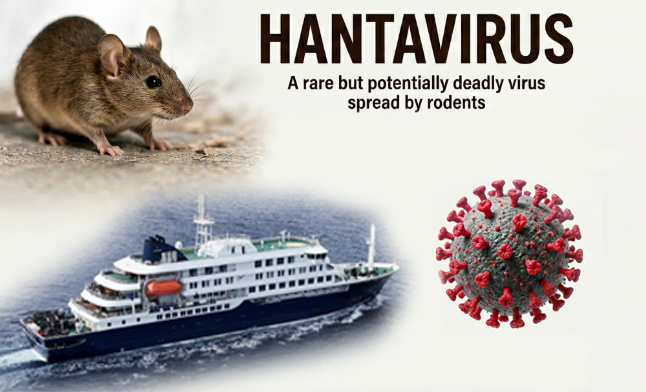
A rare and potentially deadly virus known as hantavirus has become the focus of global health discussions after a confirmed case in Switzerland was linked to an outbreak aboard the cruise ship MV Hondius. The incident has already resulted in multiple deaths, emergency medical evacuations, and international monitoring operations involving passengers from several countries. Health authorities across Europe, Africa, and South America are now working together to contain the outbreak and understand how the virus spread onboard.
The Swiss case has intensified concerns because it shows how quickly rare diseases can cross borders through modern travel. A single infected passenger returning home from a cruise has now triggered a large contact-tracing effort, raising fears about possible additional infections in Europe and beyond.
How the Cruise Ship Outbreak Began
The outbreak began aboard the Dutch expedition cruise ship MV Hondius, which was traveling through remote regions of the South Atlantic Ocean. The vessel had departed from Ushuaia, Argentina, carrying passengers and crew from more than 20 countries. During the voyage, several passengers reportedly developed flu-like symptoms including fever, muscle pain, weakness, nausea, and breathing difficulties.
Initially, the illnesses were not recognized as hantavirus infections. However, the situation became serious after a Dutch passenger died onboard. Soon afterward, his wife became critically ill after leaving the ship in Saint Helena and later died in South Africa. Another passenger also reportedly died during the voyage, while several others required hospitalization and emergency medical evacuation.
As laboratory tests confirmed hantavirus infections, international health agencies launched investigations into the ship and its passengers. By that time, some travelers had already returned to their home countries, increasing concerns about possible international spread.
Switzerland Confirms a Linked Case
Swiss health officials later confirmed that a passenger connected to the MV Hondius outbreak tested positive for hantavirus after returning to Zurich. The patient was hospitalized, and authorities immediately began tracing everyone who may have come into contact with the infected traveler during flights and local travel.
The Swiss case has become one of the most closely watched developments because it highlights the challenges of detecting rare diseases early. Many hantavirus symptoms resemble common flu or respiratory illnesses, making diagnosis difficult in the early stages.
Public health experts say the overall risk to the general population remains low, but surveillance and monitoring have increased across Europe as authorities continue investigating the outbreak.
What Exactly Is Hantavirus?
Hantavirus is a family of viruses primarily carried by rodents. Humans usually become infected after breathing in tiny airborne particles contaminated with rodent urine, saliva, or droppings. Infection can also occur through direct contact with infected rodents or contaminated surfaces.
Different types of hantaviruses exist around the world. In Europe and Asia, infections commonly affect the kidneys and cause a condition known as hemorrhagic fever with renal syndrome. In North and South America, some strains attack the lungs and lead to hantavirus pulmonary syndrome, which can become life-threatening very quickly.
The current outbreak is believed to involve the Andes virus strain, one of the most dangerous forms of hantavirus.
Why the Andes Virus Is So Concerning
Most hantaviruses spread only from rodents to humans. However, the Andes strain is different because it is the only known hantavirus capable of limited human-to-human transmission. Scientists first documented this during outbreaks in Argentina during the 1990s. (who.int)
Health experts say person-to-person transmission is still rare and usually requires close and prolonged contact with an infected person. However, crowded environments such as cruise ships create conditions where such transmission could potentially occur.
nvestigators are now studying whether the outbreak spread through contaminated environments onboard the ship, close human interaction, or both. Scientists are conducting genetic testing on virus samples to better understand how infections are connected. (ecdc.europa.eu)
Symptoms People Should Watch For
Early symptoms of hantavirus infection often resemble the flu, which makes diagnosis difficult. Patients may experience:
- Fever
- Fatigue
- Muscle aches
- Headaches
- Nausea and vomiting
- Dizziness
- Chills
As the illness progresses, more severe symptoms can develop, including coughing, chest tightness, and serious breathing difficulties. In dangerous cases, fluid fills the lungs, leading to respiratory failure and shock.
Doctors warn that the disease can worsen rapidly within a short period. Severe pulmonary cases have mortality rates approaching 40 percent. Currently, there is no specific cure or approved vaccine for hantavirus infections.
How Doctors Treat Hantavirus
Since there is no direct antiviral treatment for hantavirus, doctors mainly focus on supportive care. Patients with severe infections often require hospitalization, oxygen therapy, and intensive care monitoring. Early treatment can significantly improve survival chances.
Health agencies are advising anyone connected to the MV Hondius outbreak to immediately seek medical help if they develop symptoms such as fever, muscle pain, or breathing problems.
Why Cruise Ships Are Vulnerable to Outbreaks
Cruise ships have long been considered high-risk environments for infectious disease outbreaks because large numbers of people live in close quarters for extended periods. Passengers share dining areas, entertainment facilities, cabins, and ventilation systems, making it easier for illnesses to spread.
The COVID-19 pandemic exposed these vulnerabilities dramatically, and the hantavirus outbreak aboard the MV Hondius has revived concerns about disease control at sea. Some passengers reportedly disembarked before the outbreak was fully recognized, creating major challenges for international health authorities.
The World Health Organization and European health agencies are now monitoring passengers and crew across multiple countries, including Switzerland, South Africa, Germany, the Netherlands, and the United Kingdom.
Is This Another Pandemic Threat?
Health experts emphasize that hantavirus is very different from COVID-19. Unlike coronavirus, which spreads easily through casual airborne transmission, Andes hantavirus generally requires prolonged close contact for person-to-person spread. Scientists therefore believe the chances of a global pandemic are low.
However, the virus remains extremely dangerous for infected individuals. Because symptoms initially resemble common illnesses, delayed diagnosis can increase the risk of severe complications.
WHO has stated that while additional cases may appear due to the virus’s incubation period, the overall public health risk currently remains low.
Global Health Agencies Continue Investigations
International investigators are now trying to answer several important questions. They want to determine how the virus first entered the ship, whether infected rodents contaminated onboard areas, and if any human-to-human transmission occurred during the voyage.
Passengers remaining aboard the MV Hondius are being monitored under medical supervision as the ship heads toward the Canary Islands. Health authorities continue tracing contacts and preparing hospitals for potential future cases.
The outbreak serves as a reminder of how quickly diseases can spread internationally in today’s connected world. A rare virus linked to remote regions of South America has now become a multinational public health issue involving several continents within weeks.
For now, scientists and doctors remain focused on containing the outbreak, treating infected patients, and learning more about one of the world’s rarest but deadliest viruses.
Image Credit: All images belong to their respective owners and are used solely for reference and informational purposes.